




Artificial intelligence seems to be everywhere right now. Patients are using AI to research their symptoms before appointments, healthcare systems are deploying AI tools behind the scenes, and surgeons are increasingly hearing about how technology may change the future of medicine.
But what does that actually mean for patients considering a hip or knee replacement?
In Episode 20 of The Joint Replacement Podcast, I sat down with Dr. Stefano Bini, Professor of Orthopedic Surgery and Chief Technology Officer for Orthopedics at UCSF, to discuss where joint replacement surgery may be headed over the next decade and how artificial intelligence, robotics, wearable technology, and digital health tools are already beginning to influence patient care.
AI Is Already Changing Healthcare—Just Not Where Most People Think
When most people think about artificial intelligence, they imagine computers diagnosing diseases or replacing doctors.
According to Dr. Bini, that’s not where the biggest impact is occurring today.
Instead, AI is already helping healthcare organizations manage scheduling, insurance authorizations, billing, coding, documentation, and operational workflows. These repetitive administrative tasks consume enormous amounts of physician and staff time and are particularly well-suited for automation.
For patients, this may ultimately mean fewer delays, faster approvals, improved communication, and more efficient healthcare experiences.
The Rise of AI-Powered Medical Documentation
One of the most rapidly adopted technologies in healthcare today is ambient documentation.
Many orthopedic practices now utilize AI-powered systems that listen to physician-patient conversations and automatically generate clinical notes.
These systems reduce documentation burden, improve efficiency, and allow surgeons to focus more attention on patients rather than computer screens.
Future versions may eventually help identify missing information, suggest diagnoses, improve coding accuracy, and provide clinical decision support during visits.
Could AI Make Surgeons Better?
This question sparked one of the most interesting discussions of the episode.
As robotics and AI-assisted technologies become more sophisticated, they may reduce the cognitive burden placed on surgeons by helping process increasingly complex information.
However, there is an important debate within medicine.
Will these technologies enhance surgeon performance and improve consistency?
Or could they eventually reduce critical thinking and problem-solving skills if surgeons become overly dependent on technology?
The likely answer is that successful surgeons will learn how to combine human judgment with technological assistance rather than replacing one with the other.
Wearable Technology and Recovery Monitoring

One of the most exciting areas of development is wearable technology.
Modern devices already track:
- Step counts
- Activity levels
- Heart rate
- Sleep quality
- Movement patterns
In the future, wearable sensors may provide surgeons with objective recovery data following joint replacement surgery.
Rather than relying solely on office visits and patient questionnaires, physicians may be able to continuously monitor recovery progress and identify problems earlier.
Imagine a patient receiving an alert before they even recognize something is wrong.
That future may not be far away.
What Are Digital Twins?
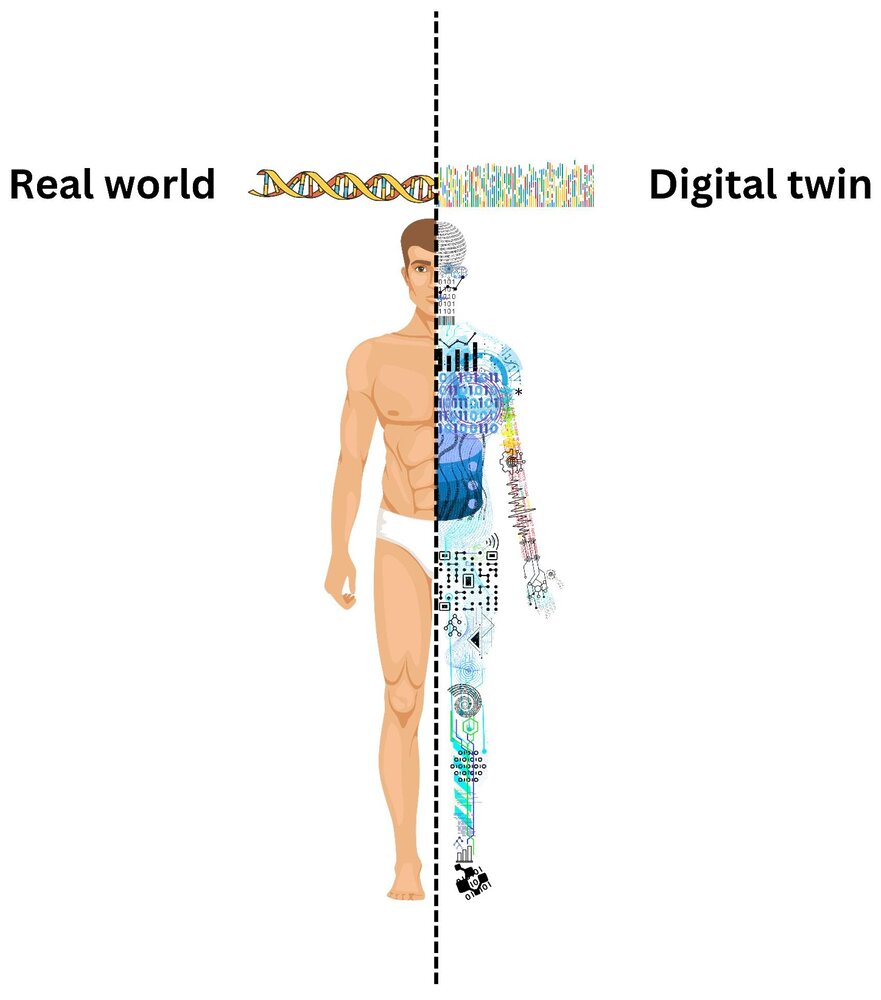
Perhaps the most fascinating concept discussed during the episode was the idea of digital twins.
A digital twin is a highly detailed virtual replica of a patient that incorporates:
- Anatomy
- Imaging
- Movement patterns
- Medical history
- Physiologic data
- Wearable sensor information
These digital models could eventually allow surgeons to simulate treatment options before surgery and predict how individual patients may respond to different interventions.
In joint replacement surgery, digital twins may someday help determine the ideal implant position, alignment strategy, and surgical plan for each individual patient.
Personalized Joint Replacement
Historically, many joint replacements were performed using standardized alignment techniques.
Today, surgeons increasingly recognize that patients have unique anatomy and biomechanics.
Future technologies may allow us to move beyond broad alignment philosophies and instead create truly individualized surgical plans based on each patient’s anatomy, ligament balance, motion patterns, and functional goals.
This represents one of the most promising opportunities for improving outcomes in total knee replacement.
Could Technology Replace Postoperative Visits?
Telemedicine experienced explosive growth during the COVID-19 pandemic.
While adoption has remained lower than many predicted, digital follow-up continues to evolve.
Future recovery programs may combine:
- Wearable sensors
- Remote monitoring
- AI-powered patient coaching
- Virtual assistants
- Telehealth visits
Rather than replacing surgeons, these tools may allow physicians to focus attention on patients who need intervention while routine recoveries proceed with minimal disruption.
The Biggest Unsolved Problem in Joint Replacement
Despite all of the technological advancements discussed during the episode, Dr. Bini believes one challenge remains at the top of the list:
Infection.
While implant technology, surgical techniques, robotics, and perioperative care have all improved dramatically, infection remains one of the most devastating complications following joint replacement surgery.
It continues to be a major focus of ongoing research and innovation.
Looking Beyond Surgery
One of the most thought-provoking parts of our discussion involved factors that may influence outcomes more than implant positioning alone.
Areas that deserve increased attention include:
- Nutrition
- Mental health
- Metabolic health
- Patient expectations
- Recovery behaviors
- Genetics
- Social support systems
As orthopedic surgeons, we often focus heavily on surgical technique. However, the future of joint replacement may involve a much broader approach to personalized patient care.
Final Thoughts
Artificial intelligence is unlikely to replace orthopedic surgeons anytime soon.
What it will likely do is provide better information, improve efficiency, expand access to care, and allow increasingly personalized treatment decisions.
Whether through robotics, wearable sensors, digital twins, or AI-powered recovery monitoring, the future of joint replacement appears poised to become more data-driven and more individualized than ever before.
While many of these technologies are still evolving, the direction is clear: better information, better decision-making, and ultimately better care for patients.
Listen to Episode 20 of The Joint Replacement Podcast featuring Dr. Stefano Bini, MD, to hear the full conversation about AI, robotics, digital health, and the future of orthopedic surgery.
References
- Stefano Bini interview on The Joint Replacement Podcast Episode 20.
- University of California, San Francisco Orthopedic Surgery.
- Journal of Bone and Joint Surgery discussions regarding AI and orthopedic outcomes research.