




A Deep Dive from The Joint Replacement Podcast
By Matthew Sloan, MD
Orthopedic Surgeon | Hip & Knee Replacement Specialist
Introduction
Partial knee replacement is one of the most misunderstood procedures in orthopedics.
Many patients come in asking:
“Can you just replace the bad part of my knee?”
The answer is: sometimes—but only if you’re the right candidate.
In this episode of The Joint Replacement Podcast, we break down:
- What a partial knee replacement actually is
- Who is (and isn’t) a candidate
- How it compares to total knee replacement
- Why precision is critical for success
What Is a Partial Knee Replacement?
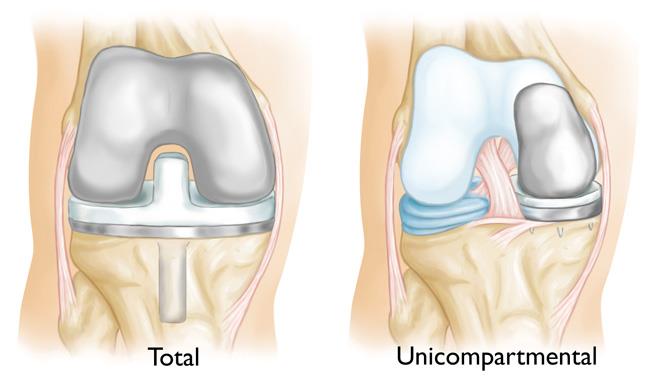
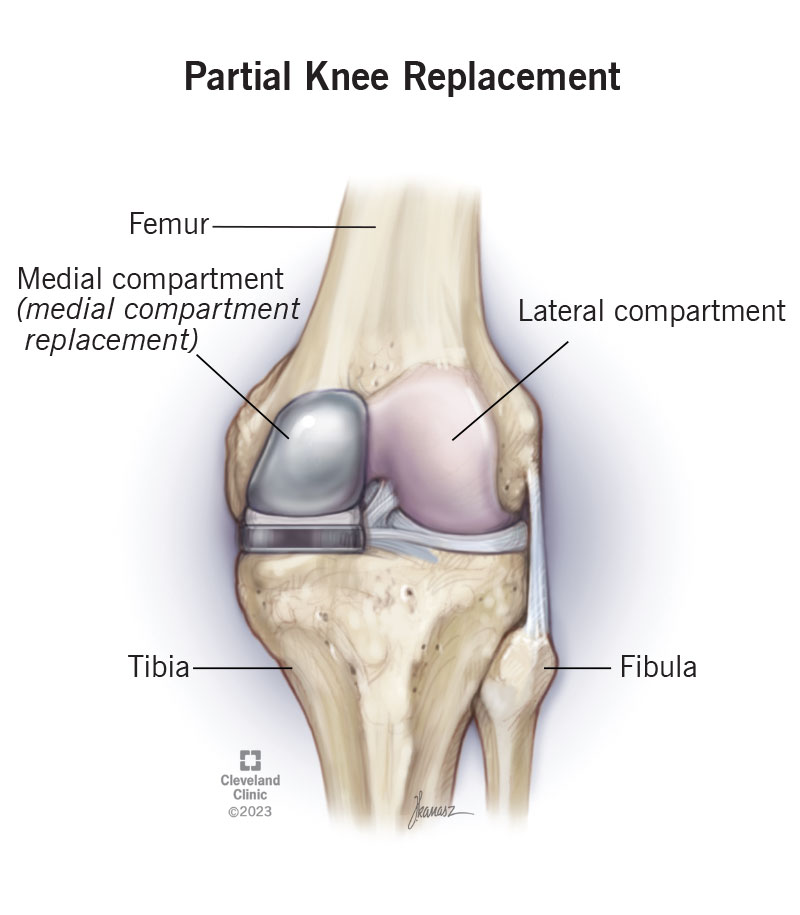
A partial knee replacement (also called a unicompartmental knee replacement) means only replacing the damaged portion of the knee, rather than the entire joint.
The knee has three compartments:
- Medial (inside)
- Lateral (outside)
- Patellofemoral (behind the kneecap)
Most arthritis affects just one compartment—typically the medial side.
Instead of replacing the whole knee, we resurface only that area.
Key Advantage:
- You preserve ligaments (including the ACL)
- You keep more of your natural bone and anatomy
- The knee often feels more natural after surgery
Benefits of Partial Knee Replacement
Patients often experience:
- Less invasive surgery
- Faster early recovery
- Less postoperative pain
- More natural knee motion
- Better functional feel
Because more of the native knee is preserved, the joint can feel less “mechanical” than a total knee replacement.
Who Is a Good Candidate?
This is the most important part of the decision.
Ideal candidates have:
- Arthritis isolated to one compartment
- Intact ligaments (especially the ACL)
- Well-preserved cartilage elsewhere
- Correctable alignment
This is not a “smaller” version of a total knee—it’s a different operation for a specific problem.
When the indication is right, outcomes can be excellent.
Who Is NOT a Candidate?
Partial knee replacement is not appropriate for patients with:
- Arthritis in multiple compartments
- Significant ligament instability
- Severe, non-correctable deformity
- Inflammatory arthritis (e.g., rheumatoid arthritis)
In these cases, a total knee replacement is usually the better option.
Why Precision Matters So Much
Partial knee replacement is technically demanding.
Because you’re only replacing part of the joint:
- Small alignment errors can overload remaining cartilage
- Ligament imbalance can affect function
- Even minor inaccuracies can lead to early failure
This is why precision is critical.
The Role of Robotic Assistance
Robotic technology has significantly improved partial knee outcomes by allowing:
- Preoperative 3D planning
- Precise implant sizing and positioning
- Real-time intraoperative feedback
- Dynamic assessment of ligament balance
Instead of relying on estimates, surgery becomes customized to each patient’s anatomy.
Partial Knee vs Total Knee Replacement
| Feature | Partial Knee | Total Knee |
|---|---|---|
| Surgical extent | Smaller | Larger |
| Recovery | Faster (early) | Slightly longer |
| Feel | More natural | More mechanical |
| Durability | Good (right patient) | More predictable long-term |
| Indication | Isolated arthritis | Multi-compartment disease |
A key point:
👉 A partial knee can be converted to a total knee later if needed.
Longevity and Outcomes
Partial knee replacements can perform very well long-term.
Historically, they had slightly higher revision rates, but this is often due to:
- Poor patient selection
- Technical inaccuracies
When done in the right patient with high precision, outcomes are excellent and durable.
The Biggest Misconception
“Partial knee replacement is always better because it’s smaller.”
This is not true.
👉 It’s only better if you’re the right candidate
👉 Otherwise, a total knee replacement is the better operation
Key References
- American Academy of Orthopaedic Surgeons — Knee Replacement Guidelines
- American Association of Hip and Knee Surgeons — Patient Education Resources
- American Joint Replacement Registry — Outcomes data
- The Journal of Arthroplasty — UKA vs TKA outcomes literature
Final Thoughts
Partial knee replacement is a fantastic operation—when used in the right patient.
It offers:
- Faster recovery
- More natural knee function
- Less invasive surgery
But it requires:
- Careful selection
- Surgical expertise
- High-level precision
If you’re considering knee replacement, this is a conversation worth having with your surgeon.
🎧 Listen to the full episode of The Joint Replacement Podcast for a complete breakdown—and stay tuned for an upcoming interview with one of the highest-volume partial knee surgeons in the country.